Posted in Fitness, General Wellness, Health Coaching, Nutrition
The Beginner’s Guide to Heart Health (Without the Cardio Misery)
If you’ve ever dragged yourself onto a treadmill thinking, “I hate this, but my heart needs it,” you’re not alone.
Most people have been told that better heart health = hours of sweaty, gasping cardio. Long runs you dread. Spin classes where the instructor yells about “earning your brunch.” Workouts that leave you wondering if this is really what “healthy” is supposed to feel like.
Good news: that’s not the full story.
You don’t need to become a marathon runner, live on the StairMaster, or pretend burpees are your love language to take care of your heart. When it comes to long‑term heart health, what really moves the needle is a mix of simple, repeatable habits you can actually stick with.
This article walks you through what truly matters for heart health—without the cardio misery.
Why Heart Health Matters (Beyond Just “Avoiding a Heart Attack”)
Your heart does a lot more than keep you alive. A healthier heart usually means:
- Better, more stable energy during the day (less afternoon “why am I like this?” crash)
- Easier breathing when you climb stairs or carry groceries
- More stamina for the stuff you actually enjoy (playing with kids, walking the dog, hiking, traveling)
- Lower risk of conditions like high blood pressure, high cholesterol, and type 2 diabetes
So yes, heart health is about preventing scary stuff down the road—but it’s also about feeling better in your everyday life right now.
The key is finding ways to support your heart that don’t feel like punishment.
Myth: “Serious Cardio” Is the Only Way to Improve Heart Health
There’s a common belief that if you’re not drenched in sweat and mildly questioning your life choices, it “doesn’t count.”
Here’s the reality:
- Research consistently shows that regular, moderate movement is incredibly powerful for heart health.
- You don’t have to hit extreme heart rates or crush yourself five days a week.
- Consistency beats intensity—especially if you’re busy, out of practice, or starting from a lower fitness base.
The goal isn’t to suffer through workouts. The goal is to build a lifestyle where moving your body is normal, not an occasional punishment.
Let’s break down what actually moves the needle.

1. Walking More Than You Think (But Less Than You Fear)
If you remember nothing else from this article, remember this: walking is one of the most underrated heart‑health tools you have.
You don’t need to hit 10,000 steps right away or power‑walk like you’re racing for the last boarding call. Think of walking as your “base layer” for heart health.
Why walking helps your heart:
- Gently increases your heart rate without beating you up
- Supports blood pressure, blood sugar, and cholesterol
- Helps manage stress and improve mood (free therapy, no waiting room)
- Easy to recover from, so you can do it often
Simple ways to add more walking (without rearranging your life):
- 5–10 minute walks after meals (bump it up to 20 mins to get a bonus of lower post meal blood sugar levels)
- Parking a little farther away on purpose
- Walking during phone calls or meetings when possible
- One short “loop” around the block in the morning and evening
How to Know Where You Stand (Tracking Your Progress)
Before you can improve, you need to know your starting point. You don’t need fancy equipment to get a baseline:
- Your Smartphone: Most phones have a built-in health app (like Apple Health or Google Fit) that tracks steps automatically if the phone is in your pocket.
- Smartwatches & Fitness Trackers: Devices like a Fitbit, Apple Watch, or Garmin provide the most consistent data and reminders to move.
- A Simple Pedometer: If you want to keep it low-tech, a basic clip-on pedometer is inexpensive and highly effective.
The Strategy: Use your tracker to find your “daily average” for one week. If that average is 3,000 steps, your goal for next week is 3,500—not 10,000.
A Note on the 10,000 Step Goal: You’ve probably heard that 10,000 steps is the “magic number.” While that is a great long-term target for optimal heart health, it is more of the finish line, not the starting blocks. Focus on making small, 500-step jumps every few weeks. Consistency at 5,000 steps is infinitely better for your heart than hitting 10,000 once and being too sore to move for the rest of the week.

2. Strength Training: The Quiet Hero of Heart Health
When people think “heart health,” they think cardio. But resistance training (lifting weights, using bands, or bodyweight exercises) plays a huge role too.
Stronger muscles can help:
- Improve how your body uses blood sugar
- Support healthy blood pressure
- Make daily activities easier, which encourages you to move more
- Protect your joints so you’re not sidelined by aches and pains
You don’t have to live in the gym or become a powerlifter.
A realistic strength‑training goal:
- 2–3 sessions per week
- 20–40 minutes each
- Focus on big movements: squats, hinges (like deadlifts or hip hinges), pushes, pulls, and carries
At‑home examples:
- Sit‑to‑stands from a chair (squat pattern)
- Wall push‑ups or countertop push‑ups
- Rows with a band or backpack
- Light dumbbell or backpack deadlifts
The goal isn’t to chase gym PRs (unless you want to); it’s to keep your muscles and metabolism working in your favor so your heart doesn’t have to do all the work alone.
The Power of “Exercise Snacks”
If the idea of a 30-minute workout feels like a mountain you can’t climb today, try Exercise Snacks. This is a newer term in the fitness world for short, 1-to-2-minute bursts of movement spread throughout your day.
The best part? These aren’t just for cardio; they work for strength and mobility, too.
- Cardio Snacks: Sprint up a flight of stairs, do 60 seconds of jumping jacks, or march in place vigorously while the microwave runs.
- Strength Snacks: Do 10 air squats while your coffee brews, or 5 push-ups against the kitchen counter while waiting for a phone call to start.
- Mobility Snacks: Spend 60 seconds reaching for your toes or doing shoulder rolls between deep-focus work tasks.
Why it works: These “snacks” break up long periods of sitting (which is great for your blood pressure) and prove to your brain that you do have time to move.
The Beginner Rule: Don’t worry about breaking a sweat. The goal of a snack is simply to “wake up” your heart and muscles. If you do 3–5 of these a day, you’ve added 10 minutes of movement to your life without ever putting on gym clothes.

3. Cardio That Doesn’t Feel Like Punishment
Do you need some dedicated cardio? For most people, yes—but it doesn’t have to be miserable.
Think less “all‑out bootcamp” and more “activities that get your heart rate up a bit and that you don’t hate.”
Some options:
- Brisk walking on flat or slightly inclined ground
- Cycling at a comfortable pace
- Swimming or water aerobics
- Dancing in your living room
- Hiking or easy trail walks
A helpful target for most adults is:
- ~150 minutes per week of moderate‑intensity cardio
That might sound like a lot, but you can break it down into:
- 30 minutes, 5 days per week, or
- 10–15 minutes, 2–3 times per day on most days
If you’re new to movement, start smaller: 10 minutes every other day is still meaningful progress. We’re building a heart‑healthy lifestyle, not auditioning for a fitness commercial.
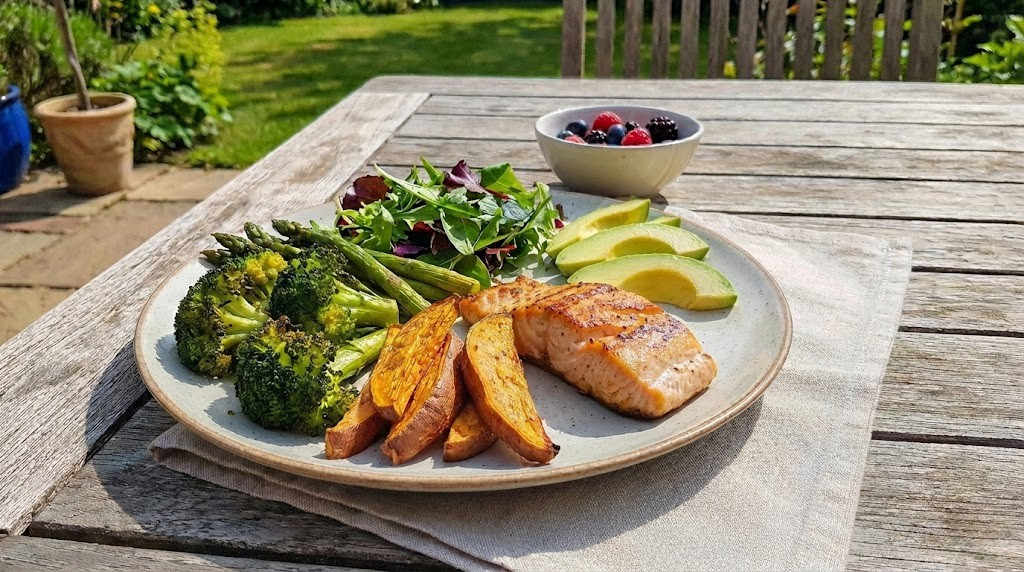
4. Food Choices That Support Your Heart (Without a Lifetime of Salad Sadness)
Nutrition absolutely matters for heart health—but that doesn’t mean you’re doomed to dry chicken and lettuce forever.
The “One Extra” Rule
Instead of trying to overhaul everything at once, try adding one extra serving of veggies per day.
Let’s be honest: For some of us, this means actually adding a serving of veggies to our day for the first time! And a quick reality check: French fries and ketchup do not count. We’re aiming for things like leafy greens, broccoli, peppers, carrots, etc.
The Ideal Plate
Think of it as gradually shifting the balance of your plate—not “earning” your food with exercise or banning everything fun. A simple way to visualize this is the Heart-Healthy Plate:
- 50% Vegetables: Fill half your plate with color (the non-fry kind).
- 25% Lean Protein: Fish, chicken, tofu, or Greek yogurt.
- 25% Starchy Carbs: Potatoes, brown rice, or whole-grain pasta.

5. Stress, Sleep, and the “Background Noise” That Affects Your Heart
Your heart doesn’t just respond to what you eat and how you move. It also listens closely to your stress and sleep.
Chronically high stress and not enough sleep can:
- Keep your blood pressure higher
- Make it harder to manage cravings
- Drain your energy so movement feels impossible
You don’t need a 2‑hour morning routine to help your heart out here.
Simple, realistic options:
- 2–5 minutes of slow, deep breathing before bed or during the day
- A consistent bedtime and wake time
- One small wind‑down habit at night: reading, stretching, or a short walk
None of this has to look Instagram‑worthy. It just has to be repeatable.
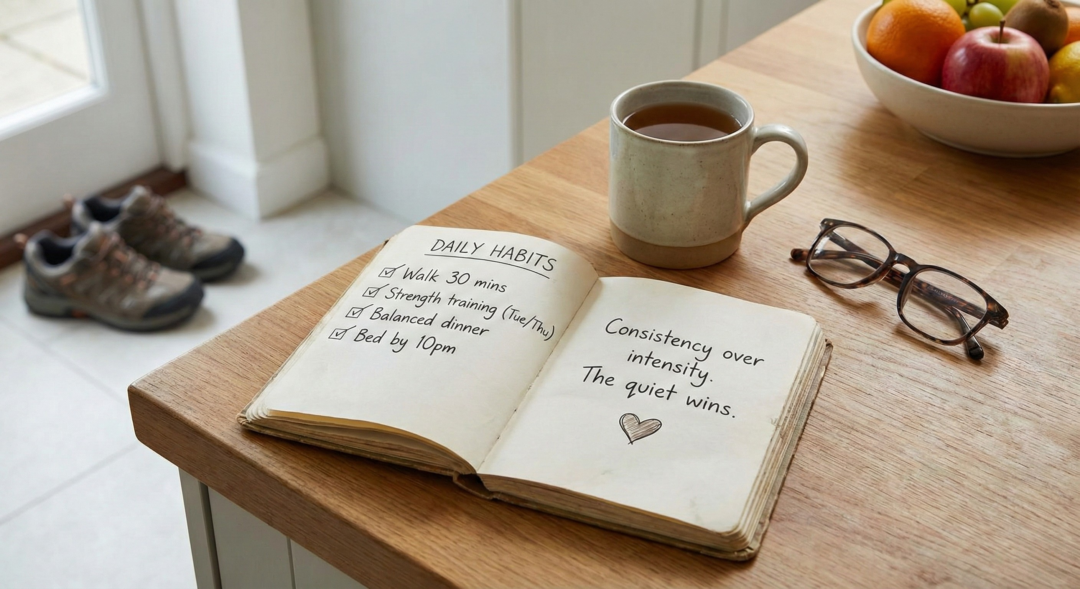
6. The Real Secret: Boring, Repeatable Habits
This is the part no one puts on a fitness magazine cover, but it’s the truth:
The biggest wins for heart health usually come from the boring, repeatable stuff you do most days—not from one heroic workout.
That might look like:
- Walking a bit more this week than last week
- Strength training twice most weeks
- Choosing a more balanced meal one extra time per day
Getting to bed 15–30 minutes earlier a few nights per week
Individually, these habits don’t feel dramatic. Together, over months and years, they quietly stack up into better blood pressure, better cholesterol, better stamina, and a heart that’s much happier doing life with you.
Bringing It All Together
You don’t need to:
- Live at the gym
- Love running
- Be “perfect” with your food
You do need:
- Regular, realistic movement: Focus on your “base layer” of walking and some simple strength work.
- Cardio you actually enjoy: Don’t settle for something you hate. Experiment with different activities until you find a fit. This could be hiking a local trail, taking a dance class, joining a beginner group class, following an online video at home, or getting out on a bike. If it gets your heart rate up and you enjoy it, it counts!
- Gradual, sustainable nutrition upgrades: Remember the “One Extra” rule for real veggies.
- A bit more care for your stress and sleep.
Start small. Pick one or two changes that feel doable this week. Your heart doesn’t need you to become a different person overnight; it just needs you to start showing up consistently in ways that feel realistic and even a little bit fun.
If you’d like support turning this into a simple, personalized plan—without extreme rules or shame—this is exactly what coaching is for. We can look at your current lifestyle, your health markers, and your stress levels, then build heart‑healthy habits that fit your real life (no cardio misery required).